
The number of ADA Title III lawsuits filed in federal court in 2018 hit a record high of 10,163 – up 34% from 2017 when the number was a mere 7,663. This is by far the highest number of annual filings since we started tracking these numbers in 2013, when the number of federal filings was only 2,722. In other words, the number of cases has more than tripled. The chart below shows the explosion in these types of suits:
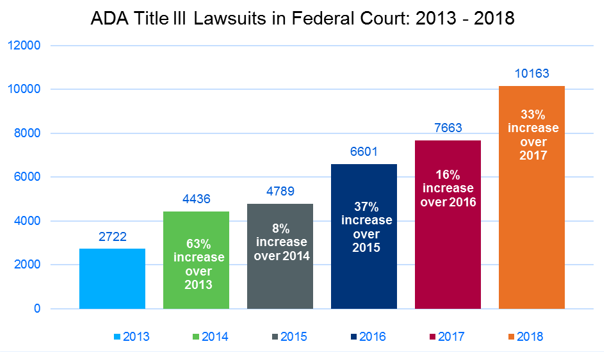


The big news among the top three states is that New York displaced Florida as the second busiest jurisdiction. Filings in New York more than doubled from 2017 to 2018 (1023 vs. 2338) while the number of cases filed in Florida only increased from 1488 to 1941. The number of lawsuits filed in California increased by 54% from 2751 in 2017 to 4249 in 2018. This record-breaking California number does not even include the many state court filings which we do not track.

What is driving the ADA Title III lawsuit explosion? We are still crunching the numbers but we believe there were nearly 2000 federal lawsuits about allegedly inaccessible websites filed in 2018. There were very few of these cases before 2015. In addition, plaintiffs and their attorneys branched out into suits about hotel reservations websites in 2018, further driving the numbers. We also continue to see many lawsuits about physical access barriers.
A note on our methodology: Our research involved a painstaking manual process of going through all federal cases that were coded as “ADA-Other” and manually culling out the ADA Title II cases in which the defendants are state and local governments. The manual process means there is the small possibility of human error, but we are confident in our process.
 On January 15, 2019, the Ninth Circuit Court of Appeals issued the fifth federal appeals court
  Businesses across the country have been asking Congress to provide some relief from ADA “drive by” and “gotcha” lawsuits about physical access barriers at public accommodations facilities. Federal efforts to amend the ADA stalled early in 2018, but a new Ohio law may provide businesses in that state with some advance notice and an opportunity to cure physical access violations before being held liable for paying the plaintiff’s attorney’s fees – at least under Ohio accessibility laws.
 In response to the onslaught of website accessibility lawsuits against public accommodations covered by Title III of the ADA, some website accessibility consulting companies have been promoting solutions that involve the use of an alternative version of a business’ primary website that conforms to the Web Content Accessibility Guidelines 2.0 AA (WCAG 2.0 AA). The alternative version is typically accessed through a link on the website and, unlike the bare bones “text-only” websites of the past, looks very much like the non-accessible website. While not cheap, this solution is appealing to many businesses because it requires no coding changes to the primary website, no substantial commitment of internal company resources because it is implemented by the third party consultant, and can be implemented fairly quickly to provide immediate access for users with disabilities.
 Seyfarth Synopsis: The Court of Appeals for the First Circuit says that an agreement to arbitrate presented visually to blind plaintiffs on a POS device and never read to them is not binding.
 In the increasing morass of varying state and federal district court opinions in website accessibility cases, we will soon have two additional federal appellate decisions to provide more guidance of precedential value to federal trial courts. Most recently, on October 12, the Ninth Circuit heard the parties’
  Allegations that an inaccessible website prevents a blind plaintiff from “learning” about a brick-and-mortar location are insufficient to state an ADA claim, according to one recent federal court decision in Florida. In
 2018 has been a bad year for most businesses that have chosen to fight website accessibility cases filed under Title III of the ADA. Plaintiffs filing in federal court secured their second judgment on the merits in a website accessibility lawsuit, bringing the federal court judgment score to 2-0 in their favor. Additionally, in twenty-one cases where defendants filed early motions to dismiss, judges have allowed eleven to move forward. While a forty percent dismissal rate doesn’t seem bad, most of the cases that were dismissed had a common set of unique facts that most defendants don’t have. Below is a rundown of the most noteworthy 2018 cases and trends.