
By: Minh N. Vu, Kristina M. Launey and Susan M. Ryan
Seyfarth Synopsis: Mid-year federal ADA Title III lawsuit numbers are at an all-time high since 2021.
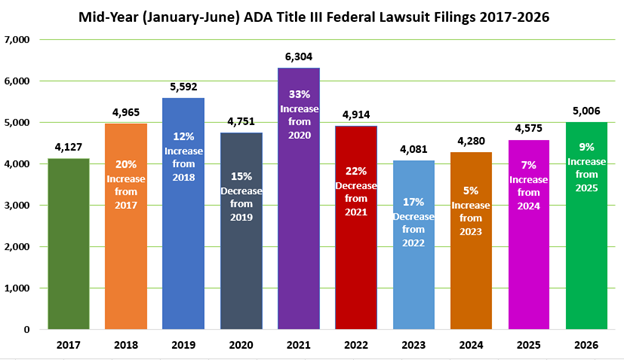
Halfway into 2026, the ADA Title III plaintiff’s bar and their clients have filed 5,006 federal ADA Title III suits in federal court – a significant increase from the past four years which had an average of 4,463 filings in the first six months. If this trend continues, 2026 could end with over 10,000 federal filings – a record since 2021 when the number peaked at an all-time high of 11,452 lawsuits.
Here are the top ten states with the highest number of cases filed so far this year:
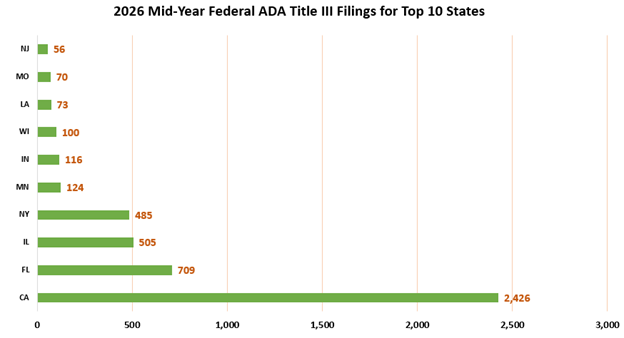
Plaintiffs’ lawyers and their clients continue to bombard the California federal courts with 2,426 lawsuits, despite the courts’ efforts to discourage these lawsuits by refusing to consider state law claims for damages. Florida came in a distant second with 709 cases filed. Illinois took the third spot, where there were 505 filings so far this year. Equal Access Law Group was responsible for 336 of those Illinois filings. New York, usually showing up in the second or third position dropped to fourth, with 485 filings. Minnesota took fifth place with 124 cases, 121 of which were filed by the Throndset Michenfelder firm. Rounding out the top ten are: Indiana (116), Wisconsin (100), Louisiana (73), Missouri (70), and New Jersey (56).
The overall larger number of lawsuits is consistent with our observation that several relatively new plaintiffs’ firms have arrived on the ADA Title III scene. The decrease in New York filings likely reflects the fact that the federal courts there have applied somewhat more stringent standing standards in website accessibility lawsuits, causing plaintiffs to file in state court instead.
Check back with us in early 2027 when we will share our final tally and more in-depth analysis for 2026.
Our Methodology: Our overall ADA Title III lawsuit numbers come from the federal court’s docketing system, PACER. However, because the area of law code that covers ADA Title III cases also includes ADA Title II cases, our research department reviews the complaints to remove those from the count.