By Eden Anderson

Seyfarth Synopsis: The DOJ issued guidance on two COVID-era access issues, confirming outdoor business operations must comply with the ADA and prohibiting medical providers from adopting blanket bans on companion accompaniment.

The Department of Justice (DOJ) recently updated its Common Questions About COVID and the ADA (“Common Questions”) to include information on issues of interest to businesses with outdoor operations, including so called “streateries,” and to medical providers.  For restaurants and retailers that created sidewalk and parking-lot retail and eating areas to adapt to pandemic health restrictions, the DOJ makes clear those areas must be accessible to individuals with disabilities. For medical providers, the DOJ emphasizes a case-by-case analysis must be conducted of companion accompaniment requests.  The previous version of the DOJ’s Common Questions addressed only how the pandemic did not alter rules for admission of service animals and issues of more relevance to employers, including whether long COVID qualifies as a “disability.”  The newly added FAQs provide important new guidance for businesses grappling with COVID-era operational challenges.

Outdoor Business Operations Must Comply with the ADA

The new information confirms that outdoor restaurant and retail areas, many of which were introduced during the pandemic, must comply with the ADA.  Businesses must ensure there is an accessible route from the accessible parking to the outdoor eating or retail area by making sure outdoor fixtures (e.g., sandwich boards, heaters, planters, chairs, tables, umbrellas, etc.) are not blocking the path of travel.  Additionally, businesses must ensure there is an accessible route through any outdoor eating or retail space, that any outdoor check out area is accessible, and that outdoor operations do not block accessible parking spaces.

The guidance also reminds businesses with outdoor operations to be cognizant of objects that protrude into the sidewalk at heights that cannot be detected by a person with visual disability (e.g., umbrellas, canopies, table tops, tree branches or displays).  Even if the protruding object is something maintained by the city such as, for example, a tree branch, the business is obligated to report the issue to the city to have the tree trimmed.

Medical Providers Cannot Adopt Blanket Bans on Patient Companions

For medical providers trying to balance patient and provider safety with their ADA obligations, the DOJ warned that, even in the midst of the pandemic, a “blanket” rule banning all non-patients from entry into a medical facility would be impermissible.  Rather, the medical provider must consider whether a patient with disability needs someone with them to equally access medical care, and balance that need against legitimate safety concerns associated with COVID transmissibility.

For example, while a person with a mobility disability would not need a companion to assist them with mobility while in a medical facility, a person with Down Syndrome who cannot speak and who is in severe pain may need a companion to be allowed entry to ensure effective communication.  In other instances, a medical provider may instead allow for a companion’s remote participation in the patient’s care; for example, where a patient suffers a traumatic brain injury and wants their COVID-positive spouse to be involved in care discussions (we note the COVID-positive is likely key here, as the DOJ would likely otherwise require the companion be allowed in person absent extreme circumstances).  These three examples provided by the DOJ illustrate how fact-intensive the effective communication inquiry can be, with the DOJ encouraging providers to “think creatively” about how to best serve the needs of a patient with disability.

Given the importance of outdoor dining during the pandemic, it is important to ensure that your outdoor business operations are accessible.  For medical providers, the new guidance underscores the importance of ensuring that your staff conducts a case-by-case analysis of companion requests from individuals with disabilities.

Edited by Kristina Launey and Minh Vu

By Minh Vu

Seyfarth synopsis:  Winn-Dixie has asked the Eleventh Circuit to recall its decision to dismiss the appeal and underlying lawsuit as moot and that the decision be reconsidered by a full panel of Eleventh Circuit judges.

A few weeks ago we reported on the Eleventh Circuit’s decision to dismiss as moot the appeal filed by Winn-Dixie challenging a district court’s finding that the grocery retailer had violated the ADA by having an inaccessible website.  In its decision, the Eleventh Circuit didn’t just dismiss the appeal and its prior decision reversing the district court.  It also vacated the district court’s judgment for Plaintiff and remanded the case to the district court with an order that the district court dismiss the case as moot. The Eleventh Circuit’s action to dismiss the district court’s prior judgment on grounds of mootness is very surprising as the case was not moot at the time of the district court’s judgment and issuance of an injunction.  The appeal to the Eleventh Circuit only became moot because – by the time the Eleventh Circuit issued a decision on the appeal more than three years after the district court decided that Winn-Dixie had violated the ADA — the district court’s injunction requiring Winn-Dixie to make its website accessible had already expired and the website had been made accessible.

The Eleventh Circuit’s decision to dismiss the entire case as moot put an end to a five-year litigation saga — or so we thought.  However, several days after the decision, Winn-Dixie filed a motion to recall and stay the decision so that it can file a petition for rehearing en banc (i.e., a full panel of judges) on whether the appeal and underlying case are moot.  In the motion, Winn-Dixie argued that they “are not moot because, among other things, formal declaratory relief was entered below and the issue is capable of repetition, yet evading review, and the panel’s order conflicts with decisions of the United States Supreme Court and this Court and involves questions of exceptional importance concerning the ability of litigants to seek appellate review after a full trial on the merits.”  Plaintiff Gil opposed this motion.  How the Eleventh Circuit rules on Winn-Dixie’s forthcoming petition for rehearing en banc is to be determined, but only a tiny fraction of such petitions are usually granted.

In sum, the Winn-Dixie saga continues into its sixth year, underscoring the larger point that litigating these cases requires a long term commitment from both sides to paying hefty attorneys’ fees which are not always recoverable.  While plaintiffs in ADA lawsuits will be awarded reasonable fees and costs if they secure a judgment in their favor, in this rather unusual case, the fees that had been awarded to plaintiff Gil may be in jeopardy if the Eleventh Circuit’s order to vacate the district court’s judgment and dismiss the case as moot stands.  (This is somewhat ironic because plaintiff Gil had argued in his petition for rehearing en banc that only the appeal — not the district court’s judgment – was moot, but the Eleventh Circuit wound up vacating both and placing Gil’s fees in jeopardy.)  Unlike plaintiffs in ADA Title III cases, defendants can only recover fees if the claims on which they prevailed were frivolous or groundless – a more demanding standard.  The prospect of high defense costs is one reason why so many ADA Title III resolve early.

By: Ashley S. Jenkins and Minh N. Vu

Seyfarth Synopsis:  Hotels have been fighting a tsunami of hotel reservations website lawsuits with good results so far.

In the past few years, a dozen or so plaintiffs represented by a handful of law firms have sued many hundreds of hotels for allegedly not providing enough accessibility information about their accessible rooms and common areas on their reservations websites, as required by ADA regulations.  While some hotels have resolved these claims early, many have chosen to fight these suits, with some excellent results.  Below are some highlights.

Center for Disability Access Lawsuits.  As we’ve reported, a southern California firm named the Center for Disability Access a/k/a Potter Handy (CDA), has now filed over 565 of these cases with nine different plaintiffs.  These plaintiffs insist that the ADA regulations require the disclosure of very specific details, down to detailed measurements, for some accessibility features in accessible rooms.  Most hotels do not currently provide this degree of detailed information, based on guidance the U.S. Department of Justice (DOJ) issued when these regulations were first adopted.

So far there have been nearly ninety district court decisions rejecting these demands for detailed disclosures and dismissing these lawsuits.  These courts have found that — based on the DOJ’s guidance — such a detailed list of disclosures is not required.  The CDA has appealed four adverse decisions to the Ninth Circuit Court of Appeals, two of which are scheduled for oral argument on February 14, 2022.

Two recent decisions in these CDA lawsuits are noteworthy because they were dismissed on the ground of mootness rather on the merits like the others.  In Langer v. Music City Hotel LP , U.S. District Judge Phyllis Hamilton of the Northern District of California held that a hotel’s voluntary modification of the accessibility information on its hotel reservations website successfully mooted the ADA Title III claim.  The court dismissed the case and declined to exercise supplemental jurisdiction over plaintiff’s state law claims under California’s Unruh Act.  Similarly, in Whitaker v. Montes, U.S. District Judge Edward Chen held that while defendants must prove that “the allegedly wrongful behavior could not reasonably be expected to recur” to establish that a case is moot, the hotel had met that heavy burden by taking prompt action to update the accessibility information on its website.  “Although websites can easily be changed, it still took time, effort, and money for the Hotel to make that change, and now that the website information is up, there is little incentive for the Hotel to take it down,” the court reasoned.

Tenth Circuit Finds No Standing for Repeat Plaintiff Deborah Laufer.  Plaintiff Deborah Laufer has filed at least 300 lawsuits in the past five years against hotels all over the U.S. alleging that they have not provided sufficient accessibility about their hotels on their reservations websites.  The Tenth Circuit recently issued a very detailed decision in Laufer v. Looper holding that Ms. Laufer did not have standing to sue a hotel for insufficient accessibility information because she had no concrete plans to visit the town in which the inn was located or to book a room at the inn.  Thus, the alleged lack of accessibility information on the website did not result in the “concrete injury” that is necessary for her to have standing to sue.  The court explained: “[A] violation of a legal entitlement alone is insufficient under Spokeo and TransUnion to establish that Ms. Laufer suffered a concrete injury.  Article III standing requires a concrete injury even in the context of a statutory violation. And that concrete injury must affect the plaintiff in a personal and individual way.” (citations and internal quotations omitted).

The Tenth Circuit’s analysis in Laufer reminded us of the California Court of Appeal’s decision in Thurston v.Omni in which it found that a plaintiff must demonstrate an intent to use a defendant’s services to have standing to bring a claim under the Unruh Act.  The plaintiff there claimed that she had standing because she encountered a barrier on the defendant’s website that prevented her from using it.  The Court of Appeals found this injury to be of no consequence for standing purposes because a jury had found that she had no intent to do business with the hotel.

***

There will be more decisions in cases alleging deficient accessibility information on reservations websites coming out this year.  Decisions in the pending Ninth Circuit appeals – depending on what they say – will either put an end to hundreds of pending suits or encourage more lawsuits.  Stay tuned for more developments.

By Minh N. Vu

Seyfarth synopsis:  We predict 2022 will look a lot like 2021 with roughly the same number of lawsuits and DOJ pushing the boundaries of the ADA.

Like 2020, 2021 was a tough year for businesses.  Still dealing with the constantly-changing COVID-19 landscape, businesses were also bombarded with what may be another record number of ADA Title III federal lawsuits as well as rejuvenated U.S. Department of Justice (DOJ) enforcement activities.  Here are our predictions for 2022.

DOJ Enforcement Activities.  After little activity in the Trump era (except for the significant withdrawal of the web accessibility rulemaking effort), as we predicted, the new Biden Administration DOJ ramped up enforcement activity in 2021 and is pushing the law’s boundaries.  For example, in two recent settlements concerning vaccine websites of two retailers, the DOJ required conformance with WCAG 2.1 AA, even though the legal standard for the accessibility of its own websites and those of other federal agencies (under Section 508 of the Rehabilitation Act) is WCAG 2.0 AA. (DOJ has yet to issue regulations adopting any version of the WCAG for public accommodations websites and there is no pending rulemaking to do so.)  As another example, at the end of 2021, DOJ sued a chain of 23 medical eye centers that provide eye care and outpatient surgery for not having personnel to lift patients who cannot independently transfer onto exam chairs or surgery tables.  The Biden DOJ also filed four Statements of Interest in pending lawsuits in support of ADA plaintiffs within twelve months – a dramatic change from the Trump DOJ which rarely weighed in on any ADA issues.  We expect in 2022 and beyond that the DOJ will continue to be more aggressive in its enforcement of Title III of the ADA, try to expand the reach of the ADA, and be more supportive of plaintiffs in their private lawsuits.

Important Appellate Decisions.  In April 2021, the Eleventh Circuit Court of Appeals overturned a Florida district court decision that grocery retailer Winn-Dixie had violated the ADA by having an inaccessible website. The Eleventh Circuit found that the website barriers in question did not prevent the plaintiff from accessing the goods and services offered at the retailer’s stores.  In May 2021, the plaintiff filed a petition for rehearing en banc.  We thought the Court would not rule until 2022 but then a decision issued at the end of 2021.  The Court dismissed the appeal as moot, vacated its prior decision as well as the district court judgment below, and remanded the case to the district court to dismiss as moot.  We will discuss this outcome in a forthcoming post, but with this case dismissed, there are no federal appeals involving website accessibility pending.

On the opposite side of the country, the lodging industry is awaiting decisions from the Ninth Circuit Court of Appeals in four cases concerning an ADA Title III regulation that requires hotels to disclose information about the accessibility of the hotel on their reservations websites.  As we previously reported, one law firm in southern California filed over 565 lawsuits on behalf of a handful of plaintiffs alleging that the defendant hotels did not provide enough information about their accessible rooms and/or common areas on their reservations websites.  Nearly 90 district courts have rejected the plaintiffs’ demands for more information, and four of those decisions are on appeal.  How the Ninth Circuit decides these cases will impact hundreds of lawsuits that are stayed pending these appeals.  Oral argument in two of the cases is scheduled for February 14, 2022.

Federal Lawsuit Filings.  We are still crunching the numbers but the number of ADA Title III lawsuits filed in federal courts in 2021 will certainly top 11,000, and likely will continue that upward trajectory in 2022.

Website Accessibility Lawsuits.  As we reported at the end of 2021, lawsuits concerning allegedly inaccessible websites – usually by blind plaintiffs who use screen-readers to access websites –  continue to be filed at a rapid pace.  The Southern District of New York is now a favored venue for the plaintiff’s bar, along with California state and federal courts.   Website accessibility lawsuit activity in Florida quieted down after the Eleventh Circuit’s pro-business Winn-Dixie decision which has now been vacated as discussed above.  Perhaps as a result of this ruling, some plaintiff’s lawyers in Florida have now taken to filing their website accessibility discrimination complaints with Florida county human rights commissions instead of in federal court.  The benefit of filing under state and local non-discrimination laws is that plaintiffs can recover damages, unlike under the ADA which only provides for injunctive relief.

COVID-19 Related Litigation.  The pandemic and mask-wearing requirements imposed by businesses resulted in a relatively small number of lawsuits by plaintiffs alleging that they should be exempt from mask requirements because of a disability.  A number of these lawsuits were dismissed early without meaningful legal analysis, but some continue to be litigated.  Thus, we may see some substantive decisions this year on whether businesses have an obligation to modify their mask (and/or in some cases mandatory vaccination) policies for people with legitimate disabilities and what those modifications look like.

Revived Rulemaking for Equipment and Furniture.  The Obama DOJ repeatedly stated it would propose regulations for non-fixed equipment and furniture (including hotel beds) but issued no proposed regulations during the entire eight years of the Administration.  In 2017, consistent with its anti-regulation agenda, the Trump Administration pulled the plug on this rulemaking effort altogether.  In December 2021, the DOJ announced that it would issue an Advanced Notice of Proposed Rulemaking (ANPRM) in the Fall of 2022 on equipment and furniture.  While clear rules for beds in accessible hotel rooms would be very helpful for the hotel industry, we are not going to be holding our breath given DOJ’s prior inaction on this issue.

Meanwhile, the U.S. Access Board announced that it will issue an ANPRM for fixed self-service transaction machines, self-service kiosks, information transaction machines, and point-of-sale devices by April 2022.  Since an ANPRM precedes the issuance of a proposed rule, it will be many years before there will be regulations on these self-service technologies that apply to public accommodations.  Regulations issued by the Access Board are not binding on public accommodations until the DOJ (or any other federal agency) adopts them in a rulemaking of its own.  It’s a two-step process that will take years.  That said, the absence of regulations does not necessarily mean that self-service machines do not need to be accessible, as the DOJ previously stated in 2014.

***

In sum, it’s going to be a busy year for businesses on the ADA Title III front. Businesses are well-advised to review their current accessibility policies, procedures, practices, and training programs to ensure compliance with the ADA and equivalent state laws.

Edited by Kristina Launey

By Julia N. Sarnoff and John W. Egan

Seyfarth Synopsis:  A massive surge in website accessibility lawsuits filed in the Southern District of New York suggests some holiday forum shopping by the plaintiffs-side bar.

The Seyfarth ADA Title III Team wishes all of our readers a very happy holiday season!

As many of you already know, our Team monitors ADA Title III lawsuit filings nationwide (you can find our last two updates here and here).  While we hate to dampen your holiday spirits, we are writing to alert you that there has been an explosion of website accessibility lawsuits filed in New York federal courts in Q4 of 2021.

Our initial calculations indicate that, as of December 16, 2021, at least 688 website accessibility lawsuits were filed in New York federal courts in Q4 2021.  This represents a whopping 155 percent increase compared to the 272 website lawsuits filed in NY federal courts in Q3.  Especially noteworthy is that 89 percent of the Q4 lawsuits (615 cases) were filed in the Southern District of New York.  And, one firm in particular (Mizrahi Kroub LLP), has filed over 400 of those cases (at least 65 percent).

Based on these numbers, it looks like the plaintiffs-side bar has been doing some holiday forum shopping.  As we previously reported in Q3 of 2021, two judges in the Eastern District of New York issued favorable decisions to defendants with “website-only” businesses, holding that such websites are not covered under the ADA.  Shortly following those rulings, plaintiffs started filing more of their website accessibility lawsuits in the Southern District where several judges have held that the ADA does apply to web-only businesses.  The shift resulted in a dramatic decrease in the number of suits brought in the Eastern District.  Indeed, website accessibility lawsuit filings in the Eastern District decreased by more than 43 percent between Q3 and Q4 of 2021 (101 lawsuits in Q3 versus 57 lawsuits in Q4).

The bottom line is that Title III lawsuits really are the gift that keeps on giving to the plaintiffs-side bar.  Last year around this time, businesses were dealing with 150+ lawsuits by blind plaintiffs demanding braille gift cards, many of which were successfully defeated in motions to dismiss.  Several of those suits are on appeal to the Second Circuit now and others remain stayed pending these appeals.

Edited by Minh N. Vu

By Minh N. Vu

Seyfarth synopsis:  The Ninth Circuit holds that a restaurant’s practice of exclusively providing service at the drive-through and refusing to serve pedestrians at the drive-through line does not violate the ADA.

Many fast food restaurants nowadays take food orders and deliver food exclusively at the drive-through window during certain business hours.  Due to safety concerns, at many locations, restaurants do not allow pedestrians to order at the drive-through window.  Blind customers who do not drive have filed lawsuits against restaurants over this practice, alleging that this facially-neutral practice denies them access to the food offered by these establishments.

So far, the restaurants are winning.  Last week, the Ninth Circuit in Szwanek v. Jack in the Box held that the fast food restaurant’s practice of only providing service at the drive-through does not violate the ADA, even if the practice prevents blind people from being able to independently order food.  The court stated:

A facially neutral policy, like the one at issue here, violates the ADA only if it burdens a plaintiff “in a manner different and greater than it burdens others.”  The operative complaint does not plausibly allege that the Jack in the Box policy did so. The refusal to serve food to pedestrians at drive-through windows does not impact blind people differently or in a greater manner than the significant population of non-disabled people who lack access to motor vehicles. If these non-disabled individuals wish to purchase food at Jack in the Box restaurants when the dining rooms are closed, they face precisely the same burden as blind people—they must arrive at the drive-through window in a vehicle driven by someone else.

(citations omitted).  The court distinguished this case from another Ninth Circuit decision from 1996 (Crowder v. Kitagawa) in which the court concluded that Hawaii’s 120-day quarantine requirement for all dogs violated the non-discrimination requirements of Title II of the ADA (applicable to state governments) because the requirement “burdens visually-impaired persons in a manner different and greater than it burdens others.”  The court noted that visually-impaired people have a “unique dependence upon guide dogs” and the quarantine “effectively denied these persons… meaningful access to state services, programs, and activities while such services, programs, and activities remain open and easily accessible by others.”  The Ninth Circuit in Crowder had relied in part on the legislative history of the ADA which evidenced Congress’ intent to ensure that people with disabilities are not separated from their service animals.

Ninth Circuit Judge Watford dissented in Szwanek, stating his view that the “drive-thru only policy unduly burdens the blind because, as a result of their disability, they are unable to drive,” and “[t]he blind (and others whose disabilities preclude them from driving) are entitled to a reasonable modification of the drive-thru only policy because that is what’s necessary to afford them “full and equal enjoyment” of the goods Jack in the Box offers.”  While finding that the plaintiff did state a claim for violation of the ADA on the facts alleged in the Complaint, Judge Watford acknowledged that the restaurant might ultimately be able to show that the demanded modification of the policy was not reasonable or would fundamentally change the nature of the goods and services offered by the restaurant, but that those questions could not be decided on a motion to dismiss.

Szwanek comes on the heels of a district court decision from the Northern District of Illinois which also concluded that another fast food restaurant did not violate the ADA by limiting service to the drive-through and not allowing pedestrians to order at the drive-through window.  The trial court there concluded that the reason the plaintiff was denied service was because he was a pedestrian, not because he was disabled.  The court did not address the ADA’s obligation to make reasonable modifications to normal policies, practices and procedures that are necessary to ensure access, however, and the case is now on appeal to the Seventh Circuit.

Stay tuned for more updates on this evolving issue.

Edited by Kristina Launey


By Kristina M. Launey

Seyfarth Synopsis: On October 18, the DFEH issued Guidance which expressly approves denial of entry to individuals who cannot show a negative COVID test or proof of vaccination, refuse to have their temperature taken or respond to COVID-19 symptom screening questions, subject to providing reasonable accommodations to customers with disabilities.

In the latest COVID-related quandary, businesses have been bombarded with requests for exemptions to vaccination and testing requirements on the basis of disability or religion by employees and customers alike. While the EEOC had provided guidance on the employment front, there was scant guidance regarding what places of public accommodations (under Title III of the Americans with Disabilities Act [“ADA”]) and business establishments (under California’s Unruh Act) can and cannot require in the way of vaccinations and COVID-19 testing as prerequisites to entry to the business.  Until now.

On October 18, the DFEH issued a Press Release announcing the also-issued Guidance for California Businesses Regarding Covid-19 Safety Measures and Reasonable Accommodations. The Guidance authorizes businesses to require proof of vaccination, proof a recent negative COVID-19 test, and/or to wear a mask, and to deny entry or service to those to refuse.  The Guidance also specifically states that businesses may ask customers if they have COVID-19 symptoms, and/or take customers’ temperatures, and refuse service to people with COVID-19 symptoms such as loss of taste or smell, fever, or coughing.  The business may deny entry or service to someone who refuses to have their temperature taken or state whether they have COVID-19 symptoms.

The Guidance includes two caveats:

(1) These actions must be applied equally to all customers.  If they are imposed only on customers with particular characteristics, such as customers who appear to be from a foreign country, then the business violates the Unruh Act.

(2) A business must reasonably accommodate individuals with a disability that prevents them from complying with any of the above safety measures unless the accommodation or modification would create a direct threat to the health or safety of others, an undue burden to the business, or a fundamental alteration to the business’s practices.  The Guidance explicitly states that the business must take the customer’s representation that they have a disability preventing them from complying with the COVID-19 safety measure without question or digging for more detail.  The business can only engage in a type of “interactive process” with the customer to determine what reasonable alternative to allow the customer access may exist while still protecting employees and other customers.

The Guidance states that the type of reasonable alternative may need to be provided is determined on a case-by-case basis – taking the same approach we recommended earlier this year.  The Guidance identifies the following factors to consider:  The business’s layout, number of employees on duty, types of goods or services offered, customer’s needs, and whether other customers are present.  The Guidance provides examples such as a grocery store providing curb-side service to a customer, a small computer store providing service by phone, video, or text, or a bar providing outdoor service to a customer.  The Guidance recognizes there are times when there a reasonable accommodation might not be available because possible alternatives create a direct threat to the health or safety of others, an undue burden to the business, or a fundamental alteration of the business.  The Guidance provides some examples:  A salon or barbershop where customers and employees are in close contact would be justified in denying services to an unvaccinated customer; but if that customer only wanted to buy shampoo, the salon could bring the product to the customer at the curb.  As another example, a theater that denies entry to an unvaccinated patron might set up a screening outside unless it would be an undue burden or fundamental alteration of the theater’s business.

We have seen requests for exemptions to masking requirements, then vaccination mandates, based on disability since the inception of the pandemic.  What about religious exemptions of which we’ve seen more and more lately?  The Guidance states that the DFEH is not aware of any published court decision or other source of law clearly establishing that the Unruh Civil Rights Act requires businesses to reasonably accommodate the sincerely-held religious beliefs of customers. However, to facilitate the business transaction, the DFEH suggests in the final FAQ that in religious exemption situations, businesses follow the guidance provided for reasonable accommodations for disability.

Edited by Minh N. Vu


By Minh N. Vu

Seyfarth Synopsis: The Biden DOJ Civil Rights Division has been much more active than its predecessor in enforcing Title III of the ADA and supporting plaintiffs in pending litigation.

As we predicted in January, the Civil Rights Division at the Department of Justice (DOJ) under the Biden Administration has been very busy.  In the nine months since President Biden took office, the DOJ has issued a guidance on “long COVID,” filed Statements of Interest (SOI) in three ADA Title III (public accommodation) cases and three ADA Title II (state and local government) cases, and renewed its effort, dormant under the prior presidential administration, to pressure businesses to make their websites accessible to users with disabilities through threats of enforcement actions. It is even piloting a new www.ada.gov website.

Not surprisingly, all of the SOIs the DOJ has filed this year have been in support of plaintiffs with disabilities.  In the first SOI filed in the Western District of Pennsylvania, the DOJ took the position that – pursuant to the ADA obligation to make reasonable modifications to normal policies, practices, and procedures – places of lodging must provide lowered beds for people with disabilities who cannot transfer to high beds.  Regrettably, DOJ failed to state in the SOI (or anywhere else, for that matter) what constitutes a lowered bed, making it very difficult for lodging facilities to know what sort of beds they need to purchase in case they need to make such a “reasonable modification.”

In the second SOI — filed in a case in the Northern District of Illinois — the DOJ took the position that blood plasma donation centers are “public accommodations” under Title III of the ADA, even though donors are compensated for their plasma.  The DOJ stated that such centers are “service establishments” – one of the types of businesses listed under the definition of “public accommodation” under the Title III statute.  The Third and Tenth Circuit Courts of Appeals have reached the same conclusion, but the Fifth Circuit has found such centers to not be places of public accommodation.

The third SOI filed by the DOJ was in a case brought against a health care provider that used self-service check-in kiosks that are inaccessible to the blind.  The blind plaintiffs alleged that there were no employees to provide assistance so they had to seek the assistance of strangers.  The health care provider argued that the kiosks had a function to notify employees to provide assistance.  The DOJ did not find this solution satisfactory because “[r]elegating patients with disabilities who have scheduled appointments to the bottom of the walk-in waitlist because of a lack of auxiliary aids and services is treating those patients differently.”

Just last week, the DOJ filed an SOI in a case brought by the parents of school children with disabilities challenging Texas Governor Abbott’s Executive Order GA-38, which prohibits school districts from imposing mask requirements in school programs and facilities.  Although the case was brought under Title II of the ADA, which applies to the programs and activities of state and local governments, some of the arguments DOJ made could prove helpful to public accommodations defending their own mask requirements in lawsuits brought under Title III of the ADA.  For example, DOJ argued that the Executive Order denied the disabled plaintiffs who were at greater risk for COVID-19 complications access to school because the absence of masks created an unsafe environment for them.  The DOJ also argued that the Executive Order prevented school districts from complying with their obligation to make reasonable modifications to policies and procedures (i.e., require masks to be worn) to ensure that the disabled plaintiffs have access to school facilities and programs.  Under the right circumstances, a business might be able to make an analogous argument that to protect customers with disabilities who face a higher risk for COVID-19 complications and to ensure they can enjoy the business’ goods and services, the business must impose mask requirements for everyone seeking to enter its facility.

All four SOIs can be found at ADA.gov at https://www.ada.gov/enforce_activities.htm.

In stark contrast to the Trump’s Administration Civil Rights Division, which did not address any COVID-19 issues as they relate to Title III of the ADA, the Biden Civil Rights Division has also issued a joint statement with the Department of Health and Human Services stating that long COVID (i.e. new or ongoing symptoms caused by COVID-19 that can last for weeks or months after an infection) can be a disability, depending on whether the ongoing symptoms meet the definition a disability under the law.

On the investigation/enforcement front, we have seen greater activity by the DOJ in new and pending investigations.  This is no surprise and businesses should expect to see much more action from DOJ in the coming years.

Edited by Kristina Launey

By Minh Vu and John Egan

Seyfarth Synopsis: Three businesses prevail in website accessibility lawsuits in New York and California. 

Defending website accessibility lawsuits can be an expensive and difficult battle for public accommodations, but there have been a few bright spots for businesses this summer.

1.     On July 14, 2021, Judge Brian Cogan of the United States District Court for the Eastern District of New York dismissed  a website accessibility lawsuit against a print and online newspaper publisher. The Court determined that the plaintiff—a deaf individual who claimed that the media company’s website violated the ADA by not having closed captioning for its videos—failed to state a claim for violation of Title III of the ADA because the website did not fall within the definition of a “place of public accommodation” under Title III of the ADA.  The court found “[n]either a newspaper publisher nor a digital media content provider falls within any of the twelve enumerated places of public accommodation categories under the ADA” and “defendants are also not sufficiently analogous to any of the public accommodations listed in the statute to be deemed to be a public accommodation.”  This decision is of particular interest to businesses that do not clearly fit within the definition of place of public accommodation, but are nevertheless faced with website accessibility lawsuits as plaintiffs are pushing the boundaries of the law.

On the separate issue of whether a business that does fall within the twelve enumerated categories of public accommodations — but has no physical place where it offers goods and services — is covered by the ADA, the court noted that this was still an open question in the Second Circuit.

2.     On August 16, 2021, Judge Eric Komittee of the U.S. District Court for the Eastern District of New York in dismissed another lawsuit alleging that a newspaper publisher’s website violated the ADA because it contained videos without closed captioning. The court found that Title III of the ADA only covers the goods and services of a physical place of public accommodation, and the website is not a physical place.  The decision contained a very thorough discussion of the statute and relevant case law, and concluded (as did Judge Cogan in the above case) that the Second Circuit has yet to decide this issue.

Judge Komittee parted ways with Judge Weinstein of the Southern District of New York who decided in Blick Art.  Judge Weinstein relied on the Second Circuit’s decision in Allstate v. Pallozzi to conclude that websites of online-only businesses are covered by Title III of the ADAThis interpretation was a stretch because in Pallozzi, the Second Circuit held that Title III of the ADA applied to the terms of an insurance policy purchased at an actual insurance office.  Judge Komittee aptly pointed out that the goods and services offered by the insurance office in Pallozzi were clearly covered by Title III of the ADA because an “insurance office” is explicitly listed in the statute’s definition of a “public accommodation,” whereas websites are nowhere to be found in that definition.

These two recent decisions from the Eastern District of New York are welcome news for “internet-only” businesses facing steadily increasing numbers of ADA website and mobile app lawsuits in this particular district.  Businesses need to keep in mind, however, that just as many judges in the Southern District of New York have found that online-only businesses are covered by Title III of the ADA.  Furthermore, other judicial circuits such as the First Circuit do not limit the ADA’s coverage to businesses that have physical places where goods and services are offered, and district courts in that circuit have applied that precedent to find online-only businesses to be covered by Title III of the ADA.

3.     On the other side of the country, the California Court of Appeals for the Fourth Appellate District issued a decision on September 8, 2021 affirming a defense jury verdict reached in Thurston v. Omni Hotels Management Corporation. The blind plaintiff had filed this state court action under California’s Unruh Act claiming that the defendant had discriminated against her by having a website that she could not access with her screen reader.  At issue on appeal was the trial court’s instruction to the jury that, to state a claim, the plaintiff had to establish that she “attempted  to use [the hotel’s] website for the purpose of making a hotel reservation (or to ascertain the hotel’s prices and accommodations for the purpose of considering whether to make a reservation).” The jury found no such intent, resulting in a verdict for the hotel.

The Court of Appeals affirmed the judgment, finding that a plaintiff must demonstrate an intent to use a defendant’s services to have standing to bring a claim under the Unruh Act.  The Court explained that its decision was consistent with a 2019 California Supreme Court decision holding that “a person who visits a business’s website with intent to use its services and encounters terms and conditions that exclude the person from full and equal access to its services has standing under the Unruh Act, with no further requirements that the person enter into an agreement or transaction with the business.” The Court of Appeals in Thurston noted that the Supreme Court specifically stated that defendants can — on summary judgment or at trial — dispute that a plaintiff had the required requisite intent.

UPDATE:  On November 1, 2021, District Judge Cogan issued a decision holding that a website is not a place of public accommodation.

By Kristina Launey

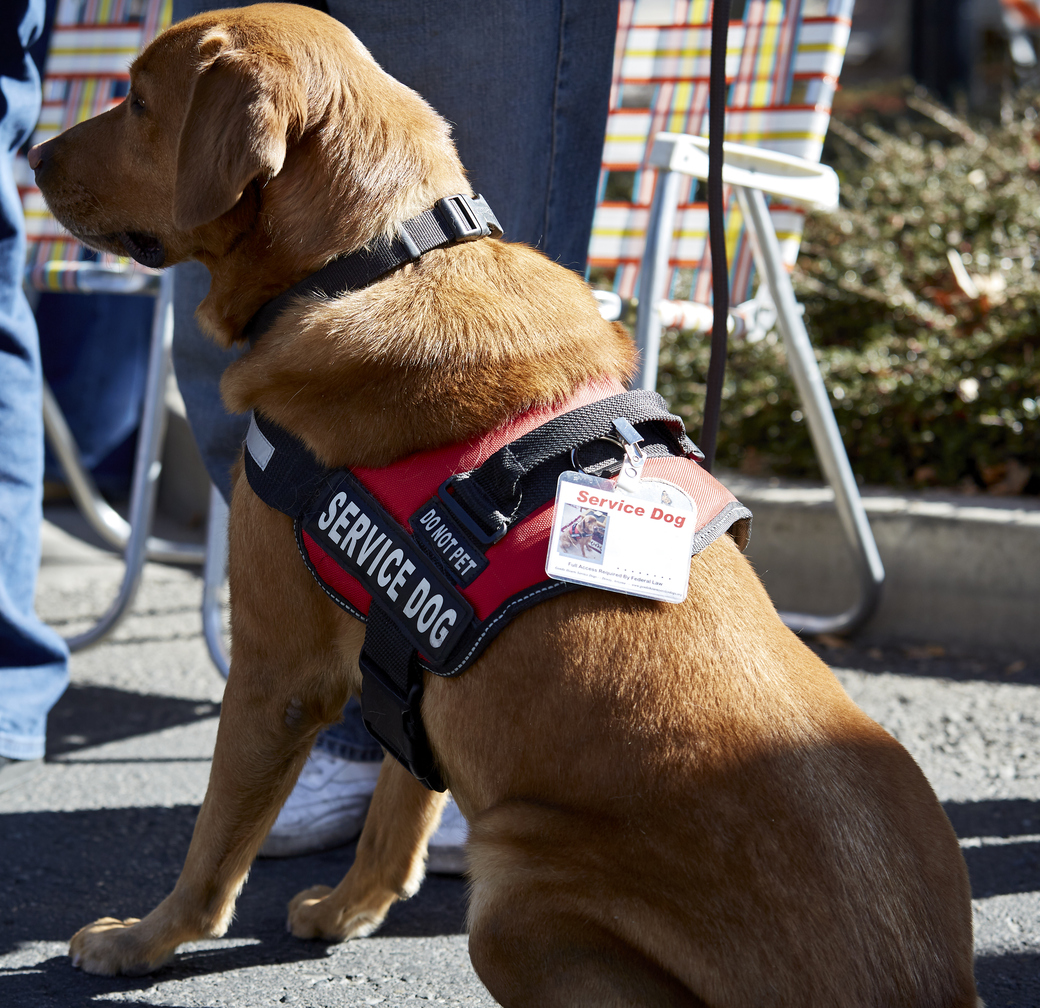
Seyfarth Synopsis:  California enacts new law, effective January 1, 2022, to crack down on fraudulent emotional support dogs.

Yesterday, September 16, having just defeated a recall effort, California Governor Newsom signed into law a bill, AB 468, that will impose various requirements, effective January 1, 2022, designed to curb emotional support animal fraud.

To be clear, emotional support animals (ESAs) are NOT service animals.  Under the ADA, a service animal is a dog that has been individually trained to perform tasks for an individual with a disability.  ESAs are not service animals under the ADA, though that line can sometimes be a bit blurry when the dog is trained to perform tasks related to mental or psychological disabilities. As the committee analyses of the legislation note, “an ESA is a dog (or other animal) that is not trained to perform specific acts related to a person’s disability. Instead, the owner of an ESA derives a sense of wellbeing, fulfillment, companionship, or lessened anxiety with the presence of the animal. Of note, ESAs do not enjoy the same legal privileges as trained service dogs: for example, while federal and state law require that service dogs be allowed to accompany their human partner in public places, ESAs on the other hand do not have to be accommodated.”

The committee analyses further note that “[a]ccording to the bill’s author and sponsors, the emergence of ESAs has led to an increase in the fraudulent selling and subsequent misrepresenting of emotional support dogs as service dogs,” including “businesses[es] now sell[ing] various misleading ESA-related certificates and merchandise that inaccurately imply that ESAs have the same legal rights and privileges as service dogs. Items generally include vests, tags, patches, holographic identification cards, and certificate documents prominently featuring the words “Emotional Support Animal” and in some instances “ESA, Protected Under Federal Law” which can imply that ESAs wearing such accessories are granted the same rights as service dogs.”

California law currently contains a provision providing that a person who knowingly and fraudulently represents a dog is a guide, signal, or service dog, can be found guilty of a misdemeanor punishable by imprisonment in the county jail not exceeding 6 months, by a fine not exceeding $1,000, or by both that fine and imprisonment.  But there was no similar provision for ESAs – until now.

The new law, sponsored by Guide Dogs for the Blind and Canine Companions for Independence, will have three main components to attempt to crack down on ESA fraud:

First, a person or business that sells or provides a dog for use as an emotional support dog will have to provide a written notice – in at least 12-point bold type, on the receipt or a separate paper – to the buyer or recipient of the dog stating that (1) the dog does not have the special training required to qualify as a guide, signal, or service dog; (2) the dog is not entitled to the rights and privileges accorded by law to a guide, signal, or service dog; and (3) knowingly and fraudulently representing oneself to be the owner or trainer of any canine licensed as, to be qualified as, or identified as, a guide, signal, or service dog is a misdemeanor.

Second, a person or business that sells or provides a certificate, identification, tag, vest, leash, or harness for an emotional support animal will also be required to provide the same written notice to the buyer or recipient.

Violation of these written notice requirements or knowingly and fraudulently representing, selling, or offering for sale, or attempting to represent, sell, or offer for sale, an emotional support dog as being entitled to the rights and privileges accorded by law to a guide, signal, or service dog, is subject to a civil penalty of $500 for the first violation, $1,000 for the second, and $2,500 for third and subsequent violations.

Third, the new law will also prohibit health care practitioners from providing documentation relating to an individual’s need for an emotional support dog unless the health care practitioner (1) holds a valid, active, license to provide professional services within the scope of the license in the jurisdiction where the documentation is provided; (2) establishes a client-provider relationship with the individual for at least 30 days prior to providing the documentation, (3) completes a clinical evaluation of the individual regarding the need for an emotional support dog, and (4) provides notice to the individual that knowingly and fraudulently representing oneself to be the owner or trainer of any canine licensed as, to be qualified as, or identified as, a guide, signal, or service dog is a misdemeanor.  Violating these requirements subjects the health care practitioner to discipline from the licensing board.

Housing providers that must make reasonable accommodations for residents who need ESAs under the federal Fair Housing Act will appreciate the new health care practitioner requirements as they will help ensure that letters from such providers in support of ESA requests are legitimate.