By Kristina M. Launey, Minh N. Vu, & Susan Ryan
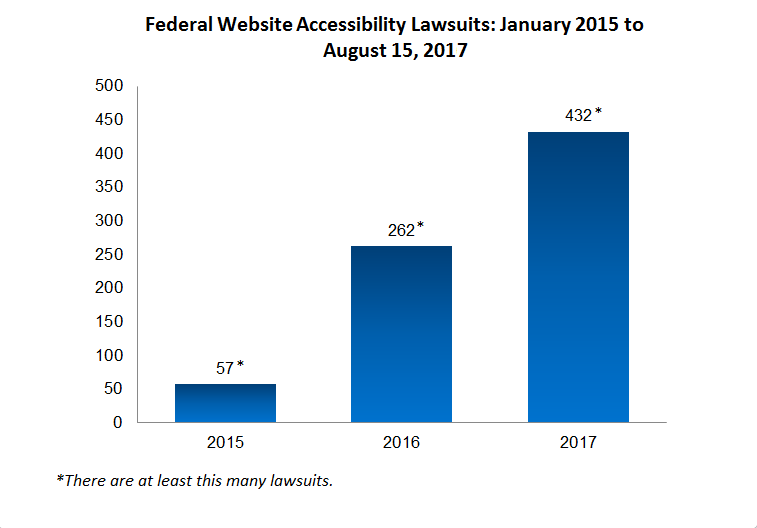
Seyfarth Synopsis: The number of federal ADA Title III lawsuits continue to surge in 2017, fueled largely by website accessibility claims; while legislative reform efforts continue to mitigate the physical accessibility portion of those lawsuit numbers.
The results of our 2017 ADA Title III lawsuit count are in, putting a fifth consecutive year (since we began tracking in 2013) of growth in the number of ADA Title III lawsuits filed in federal court. In 2017, 7,663 ADA Title III lawsuits were filed in federal court — 1,062 more than in 2016. While a bit slower growth than in 2016 (which saw an 1,812, or 37% year over year increase) over 2015, this 16% increase is almost double the 2014-2015 8% increase, demonstrating a continued upward trend in the number of filings.

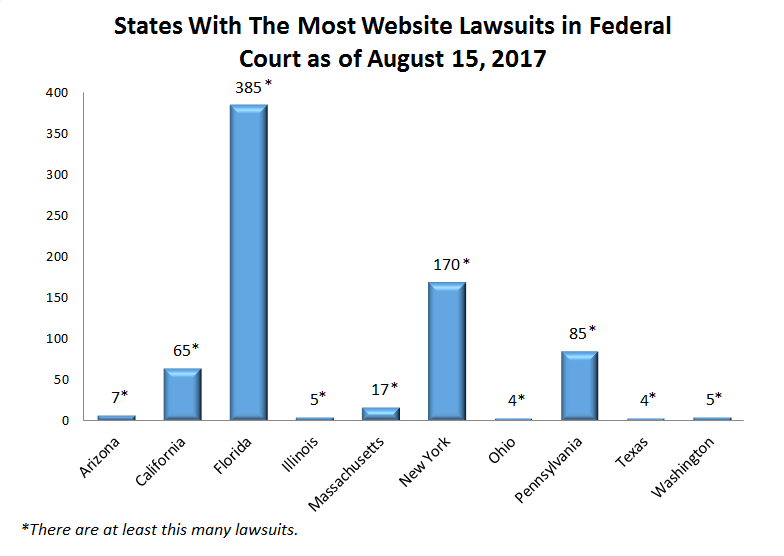
California and Florida continue to be hotbeds of litigation, with 2,751 and 1,488 lawsuits (up from 2,468 in CA in 2016 and down from 1,663 in FL) respectively. New York is the big story, having almost doubled its 543 lawsuits filed in 2016 to 1023 in 2017. Utah moved up in the ranks, with a more than doubling of federal lawsuit filings, from 124 to 360. Nevada, not in the top 10 states for filings in 2016, is relatively close behind with 276 lawsuits, while the 2016 holder of the fifth spot, Texas, dropped to number nine, cutting its 267 2016 number down by more than half, to 129. Arizona, with 335 lawsuit filings in 2016, dropped out of the top 10 in 2017. Colorado’s numbers also more than doubled, from 92 in 2016 to 215 in 2017; and New Jersey newly entered the top 10 this year with 108 lawsuits. Georgia, held its sixth spot on the chart, also holding fairly steady at 187 lawsuits, a slight decrease from the 193 filed in 2016. Finally, Pennsylvania showed relatively modest growth, increasing by 80 lawsuits over its 102 2016 count. Here are the numbers for the top ten states:
- CA: 2751
- FL: 1488
- NY: 1023
- UT: 360
- NV: 276
- CO: 215
- GA: 187
- PA: 182
- TX: 129
- NJ: 108

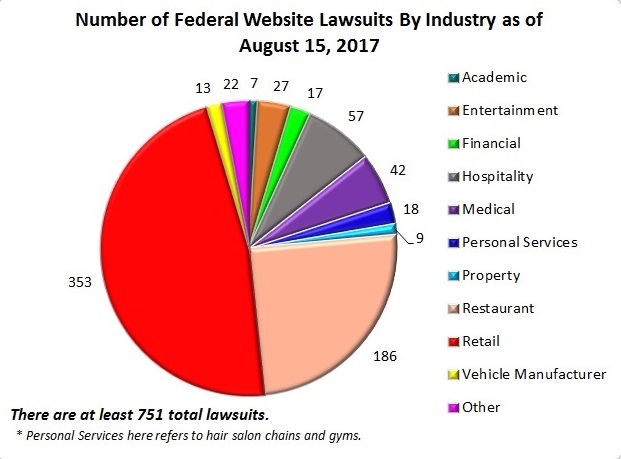
Similar to last year, while physical accessibility lawsuits remain common, these numbers continue to be driven largely by the vast numbers of website accessibility lawsuit filings, many by new attorneys in familiar (CA, FL, NY) jurisdictions. The extreme increase in New York is likely due at least in part to 2017 federal court decisions that have likely embolded plaintiffs’ attorneys in that jurisdiction. Note that these numbers of course do not include the many demand letters plaintiffs sent to businesses asserting website accessibility claims, do not include lawsuits filed only in state courts, and are conservative estimates, as our research methods are sound in finding at least the numbers we report here, and it is entirely likely we have not captured every ADA Title III filed in federal court.
Meanwhile, Congress has continued legislative efforts to provide business some relief from “drive-by” physical accessibility lawsuits. The ADA Education and Reform Act of 2017, introduced January 24, 2017 as H.R. 620 by Texas Representative Ted Poe, would, among other things, codify a “notice and cure period” that would prohibit a plaintiff from filing a lawsuit based on failure to remove an architectural barrier unless the plaintiff has first given the businesses notice of the alleged violations and an opportunity to provide a plan to address them. On October 30, 2017, the House Committee on the Judiciary reported the bill, and it is scheduled for referral to the House Judiciary Subcommittee on Constitution and Civil Justice on February 8, 2017. Some states also continued their own legislative reform efforts, such as Florida HB 727, effective July 1, 2017; and in Nevada the State Attorney General intervened in a federal ADA Title III lawsuit by a serial plaintiff who had filed at least 275 lawsuits seven months.
We will, as always, continue to keep tracking lawsuit filings, legislative efforts, and other breaking developments and keep you up to date — as the Title III trend shows no signs of cooling down in 2018.
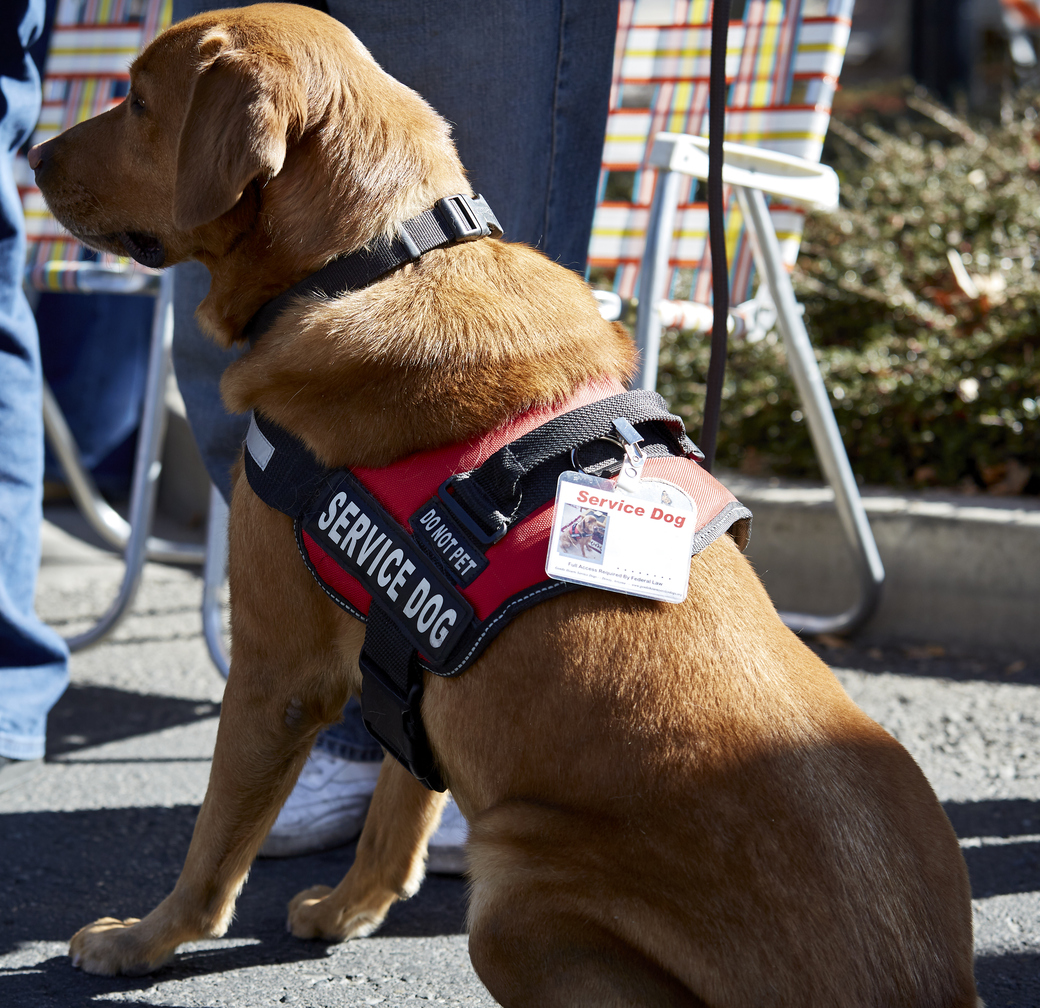 New York recently joined an increasing number of states that have passed laws aimed at curbing abuse of laws and regulations designed to ensure that individuals with disabilities can be accompanied by their service animals in places of public accommodation and other settings. On December 18, 2017, New York State Governor Andrew Cuomo signed into
  Seyfarth Synopsis: 2017 saw an unprecedented number of website accessibility lawsuits filed in federal and state courts, and few courts willing to grant early motions to dismiss.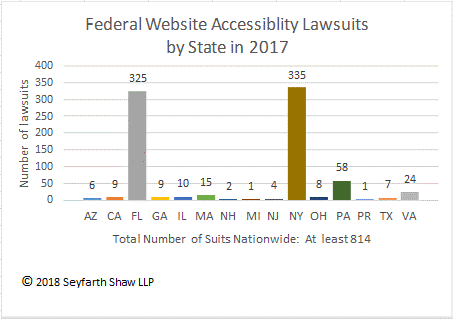
 By:
By:  On October 14, 2017 California Governor Jerry Brown signed into law
  Watching businesses deal with the at least 1,663 ADA Title III access suits filed in federal court in Florida in 2016 motivated Florida legislators to take action with
  No court has yet decided whether a public accommodation can comply with Title III of the ADA’s equal access mandate by providing telephonic access to the information and services on a website blind people cannot use with a screenreader. However, last week federal Judge Philip Gutierrez of the Central District of California recognized it as a possibility, while allowing a website accessibility lawsuit against Dave & Buster’s to move forward to discovery.
 Seyfarth Synopsis: The Supreme Court declines to review a Fifth Circuit decision stating that a public accommodation covered by Title III of the ADA has to be a physical place and vending machines are not sales establishments covered by Title III of the ADA.